
How to Distribute Wood Stove Heat Throughout Your Home
A wood stove can make a New Hampshire home feel especially welcoming during the colder months. But what happens when the living room is perfectly warm while the bedrooms, hallway, or other areas of the house still feel chilly?
Uneven heating is a common challenge for homeowners using wood stoves. While the stove may produce plenty of heat, getting that warmth to move throughout the home is another matter.
The good news? You may not need a bigger stove to improve comfort. Understanding how heat moves, where your stove is located, and how different stove designs release warmth can help you make better use of your heating system.
Quick Answer: How Do You Distribute Heat From a Wood Stove?
To distribute heat from a wood stove more evenly, improve air circulation between rooms, keep pathways open, and use fans strategically to move cooler air toward the stove room. Stove placement, home insulation, floor plan, and the appliance’s heating characteristics also affect how warmth spreads.
The goal isn’t necessarily to make the stove burn hotter. It’s to help the heat you’re already producing reach more of your living space.
Why Does a Wood Stove Heat One Room More Than Another?
Wood stoves produce heat in a concentrated area. How far that warmth travels depends on the home’s layout and the way air circulates.
In an open-concept living area, warm air may move relatively freely. In a home with narrow hallways, closed doors, multiple floors, or smaller rooms, heat distribution becomes more complicated.
Several factors can contribute to uneven temperatures:
- Stove location: A stove positioned at one end of the house may struggle to warm distant rooms.
- Interior walls and doorways: Physical barriers restrict natural air circulation.
- Ceiling height: Warm air rises, potentially leaving lower living areas cooler.
- Insulation and drafts: Heat loss through windows, doors, and poorly insulated areas affects room temperatures.
- Stove design: Different appliances release and distribute heat in different ways.
Understanding these factors is the first step toward creating a more comfortable home.
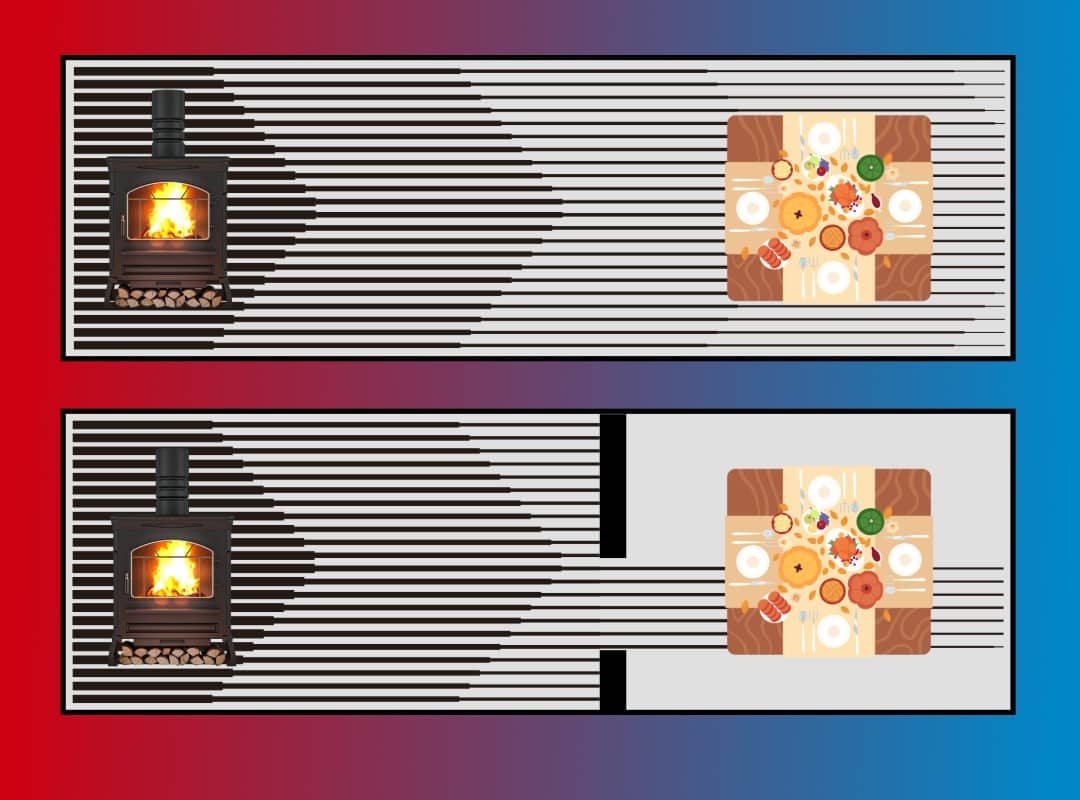
1. Use Fans to Help Circulate Warm Air
One of the simplest ways to improve wood stove heat distribution is to encourage air movement between rooms.
Should a Fan Blow Toward or Away From a Wood Stove?
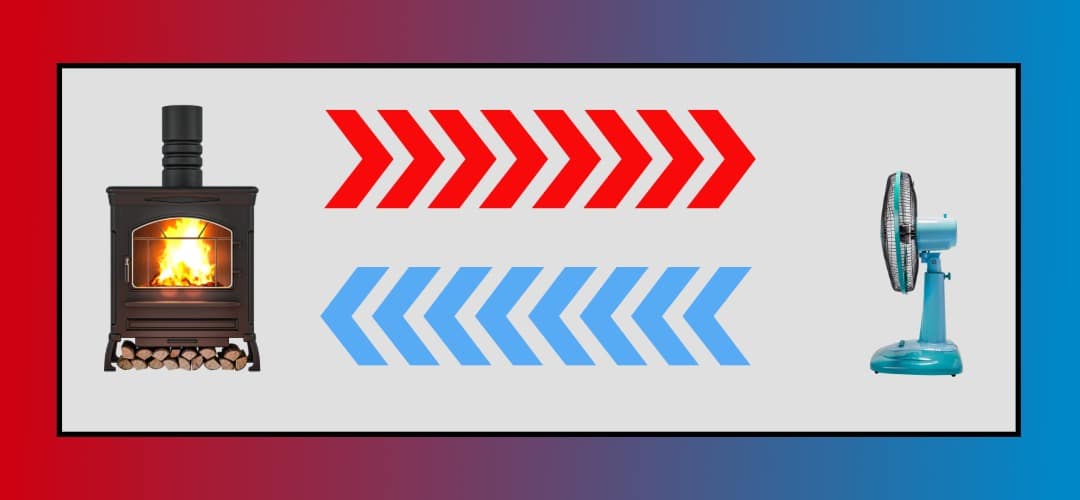
A small fan placed in a cooler adjacent room and directed toward the warmer stove room can help establish an air circulation pattern.
Moving cooler air toward the stove room allows warmer air to return through another part of the opening, helping reduce temperature differences.
For example, if your living room contains the wood stove and an adjoining hallway stays cool, positioning a fan near the hallway entrance may help move cooler air toward the living room.
Keep these tips in mind:
- Start with a low fan speed.
- Position the fan where it won’t create a tripping hazard.
- Avoid placing household fans too close to the stove or other hot surfaces.
- Keep airflow paths between rooms open when practical.
- Monitor room temperatures and adjust placement as needed.
A fan won’t overcome every limitation of a home’s layout, but it may improve comfort without changing the heating appliance.
2. Understand Radiant Heat vs. Convective Heat
Not all wood stoves deliver warmth in exactly the same way.
Two important heating characteristics are radiant heat and convection.
What Is Radiant Heat?
Radiant heat transfers warmth directly to nearby people and surfaces.
It’s the warmth you feel when sitting near a wood stove, even before the surrounding air becomes significantly warmer.
Cast-iron wood stoves are often associated with this type of comfortable, direct warmth, although their actual heating characteristics vary by model.
What Is Convective Heat?
Convective heat warms air, which can then circulate throughout the room and into connected spaces.
Some stoves incorporate convection chambers, jackets, or blower options designed to help transfer warmth into the surrounding air.
Most wood stoves provide a combination of radiant and convective heating. The balance depends on the appliance’s construction and design.
Featured Product: Jøtul Wood Stoves
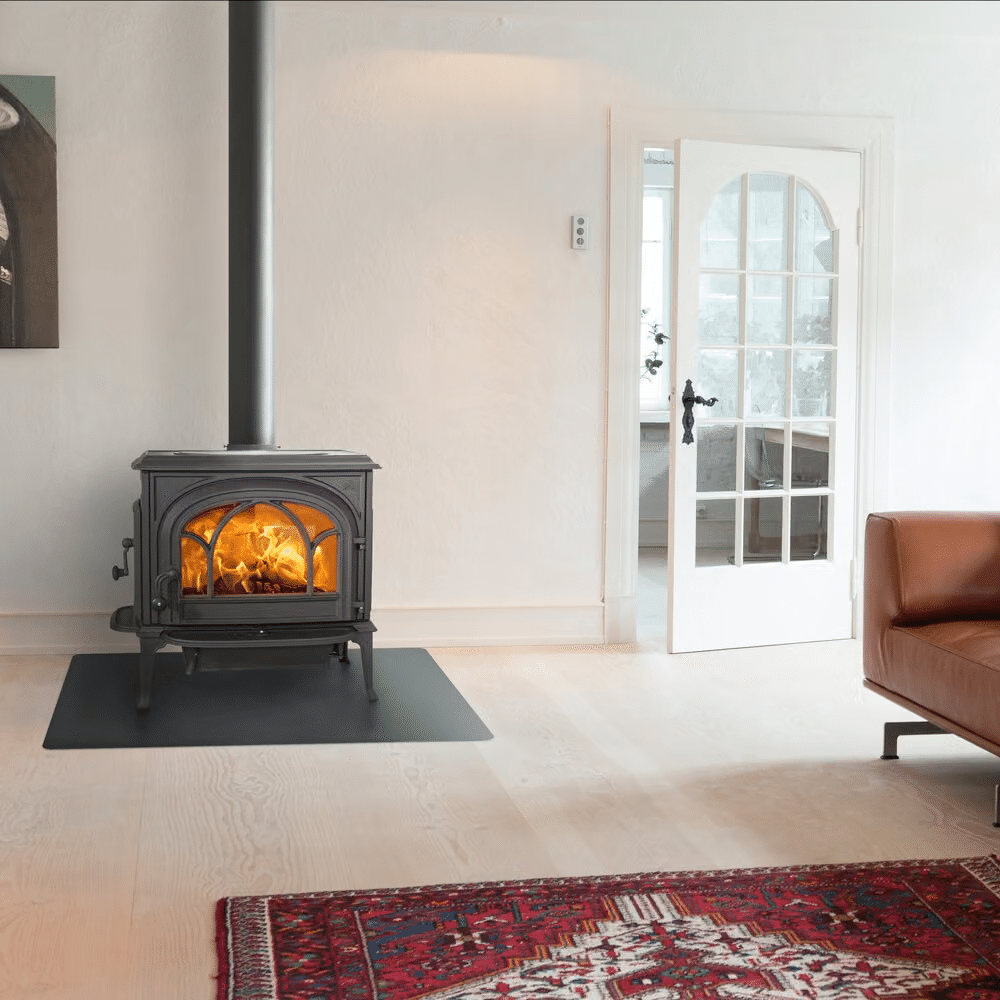
Jøtul’s cast-iron wood stoves combine traditional craftsmanship with modern combustion technology.
Models such as the Jøtul F 500 V3 Oslo and F 445 Holliday offer different sizes and heating characteristics for homeowners evaluating wood-burning heat.
For homes where a wood stove serves as a central gathering point, the appliance’s radiant warmth can contribute significantly to comfort in the immediate living area.
However, stove construction alone doesn’t determine how evenly the entire home will heat. Placement, layout, and air circulation remain important.
Explore wood stoves available at Energysavers to compare options for your home.
3. Consider How Soapstone Stoves Release Heat
Another factor worth understanding is how different stove materials absorb and release warmth.
Soapstone is a natural material known for its ability to store thermal energy.
As a soapstone wood stove operates, the stone absorbs heat. After the fire begins to decline, that stored energy continues to radiate into the surrounding space.
This creates a different heating experience from appliances designed primarily around more immediate heat transfer.
Do Soapstone Wood Stoves Heat a Home More Evenly?
Soapstone wood stoves can help moderate temperature fluctuations near the appliance because the stone absorbs heat and releases it gradually. However, soapstone doesn’t automatically distribute warmth into distant rooms.
Home layout and air circulation still determine how effectively that heat reaches other areas.
Featured Product: HearthStone Soapstone Wood Stoves
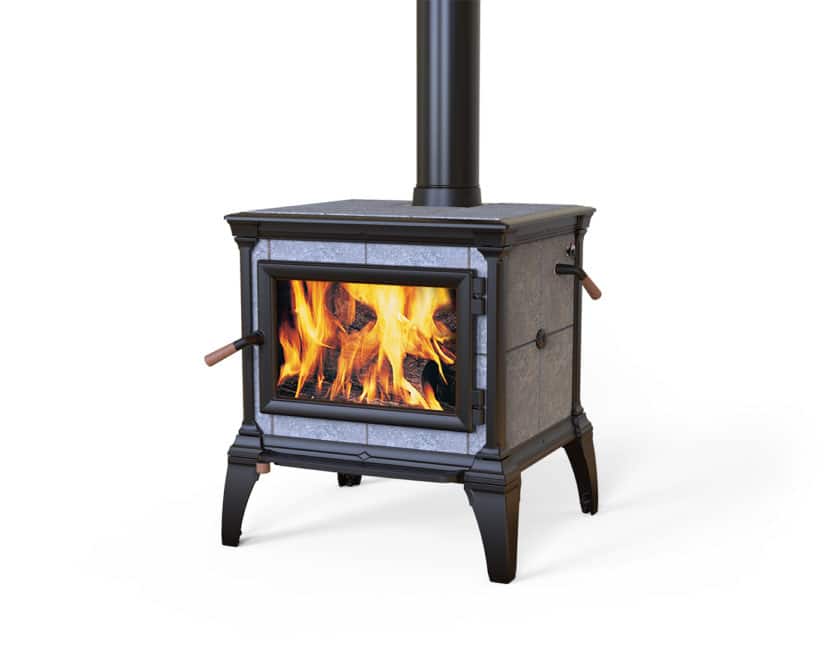
HearthStone offers wood stoves that incorporate soapstone to provide steady, gradual warmth.
For homeowners who prefer a more consistent heating experience, these thermal storage characteristics may be appealing.
The HearthStone Mansfield, for example, represents the manufacturer’s soapstone-focused approach to wood heating.
When evaluating a stove, consider not only its rated heating capacity but also how it releases warmth over time and how that heating pattern fits your household. You can compare HearthStone and other wood stove options at Energysavers to find a model suited to your heating needs.
4. Evaluate Your Home’s Layout Before Increasing Stove Output
If certain rooms remain cold, increasing the fire’s intensity isn’t always the answer.
The issue may be how the home is designed.
Open Floor Plans
Homes with connected living, dining, and kitchen areas often provide more opportunities for natural air movement.
A centrally located stove may distribute warmth more effectively throughout these shared spaces.
Homes With Multiple Rooms
Older New Hampshire homes often have enclosed rooms, narrow doorways, and separate living areas.
These features can limit heat circulation, even when the stove itself produces sufficient warmth.
Small fans and improved airflow may help, but some rooms may still require supplemental heating.
Two-Story Homes
Warm air naturally rises, but that doesn’t guarantee even temperatures between floors.
Stairway placement, insulation, room configuration, and existing HVAC systems influence how heat moves between levels.
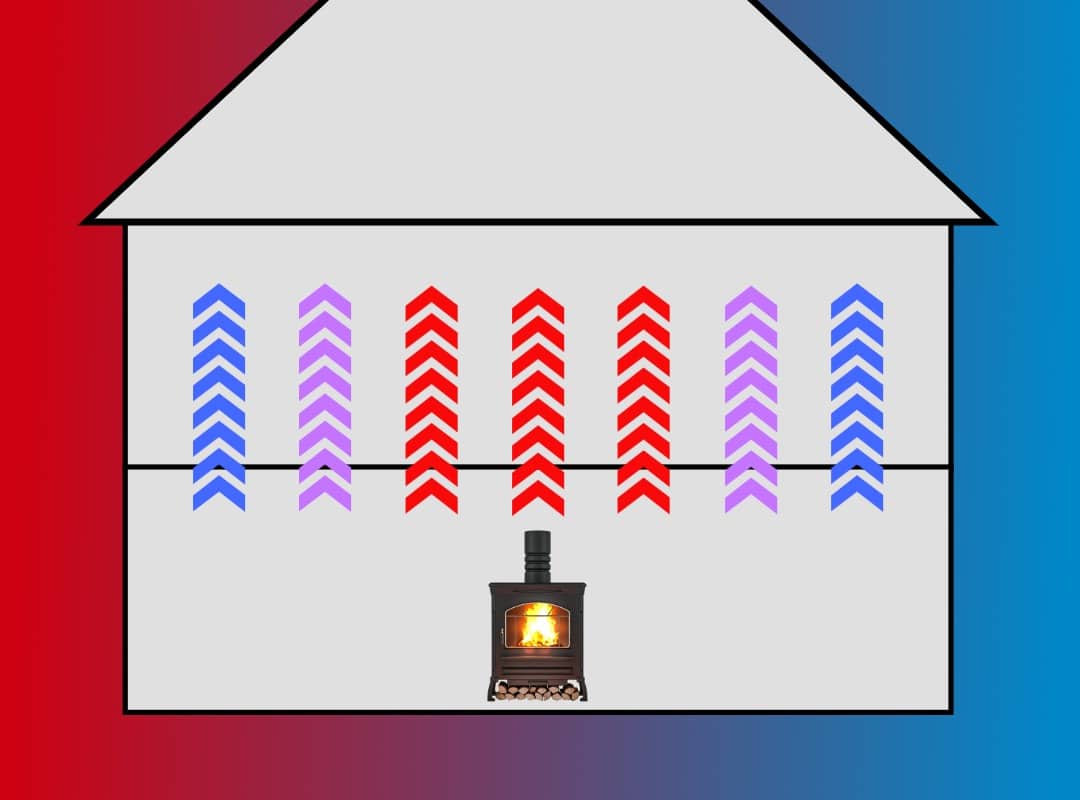
For homes with challenging layouts, a professional heating assessment can help determine whether adjustments to the existing setup or a different heating approach would provide better results.
5. Reduce Heat Loss Before Asking Your Stove to Work Harder
Even a properly sized wood stove can struggle to maintain comfortable temperatures when a home loses heat quickly.
Before assuming the stove isn’t producing enough warmth, consider whether heat is escaping through common problem areas.
These may include:
- Drafty windows and exterior doors
- Insufficient attic or wall insulation
- Unsealed gaps around penetrations
- Poorly insulated additions
- Rooms with significantly different heating demands
Addressing air leaks and insulation deficiencies can help rooms retain more of the heat your stove produces.
This is especially important in New Hampshire, where extended periods of cold weather can magnify temperature differences throughout a home.
For additional information, the U.S. Department of Energy offers guidance on air sealing and insulation.
6. Know When Your Stove May Not Match Your Heating Needs
Sometimes, uneven heating reflects a mismatch between the appliance, its location, and the home’s heating requirements.
A stove may be well suited to warming one large living area but less effective at providing heat to several enclosed rooms.
Before replacing an existing stove, consider:
- Whether the appliance is properly sized for the intended space
- Whether its location supports heat circulation
- Whether the home’s insulation is adequate
- Whether compatible blower accessories are available
- Whether the stove’s heating characteristics align with your preferences
A newer or larger stove isn’t necessarily the solution to a heat distribution problem.
When Should You Consider a Different Wood Stove?
Consider evaluating a different stove when your current appliance cannot comfortably meet your heating needs despite proper operation, maintenance, and reasonable improvements to airflow and insulation.
A hearth professional can help determine whether another model, different heating characteristics, or supplemental heating would better serve your home.
For homeowners considering an upgrade, Energysavers carries Jøtul and HearthStone wood stoves with different construction materials, heating capacities, and design features. Their team also provides professional stove installation in New Hampshire, helping homeowners select an appliance suited to their space and heating needs.
Can a Wood Stove Heat an Entire House?
A wood stove can heat an entire home in some circumstances, but results depend on the appliance’s capacity, the home’s size, insulation, floor plan, and how effectively warmth circulates.
A smaller, well-insulated home with an open layout may be easier to heat with a single stove than a large, multi-story house with numerous enclosed rooms.
For many New Hampshire homeowners, wood stoves work best as supplemental or zone heating, adding comfort to frequently occupied areas while another heating system serves the rest of the home.
The important distinction is between producing enough heat and distributing that heat effectively.
Even a powerful stove may leave distant rooms cooler if the home’s layout limits circulation.
Make the Most of Your Wood Stove This New Hampshire Winter
A comfortable home isn’t just about how much heat your stove produces. It’s about where that warmth goes.
Strategic air circulation, appropriate stove placement, good insulation, and an understanding of how different appliances release heat can all contribute to a more comfortable heating experience.
If you’re evaluating your current wood stove or considering an upgrade, the team at Energysavers can help you explore your options.
Visit the Energysavers showroom in Meredith, NH, to compare Jøtul and HearthStone wood stoves and discuss which heating characteristics make sense for your home.
Ready to improve your home’s heating comfort?
Explore Wood Stoves at Energysavers →
Frequently Asked Questions
How do you move heat from a wood stove into other rooms?
Using a small fan to move cooler air toward the stove room can help establish circulation that carries warmer air into adjacent spaces. Open doorways, room layout, and insulation also affect heat distribution.
Is radiant or convective heat better for a wood stove?
Neither is universally better. Radiant heat provides direct warmth to nearby people and surfaces, while convection helps distribute heated air. The right balance depends on the stove design, room layout, and heating preferences.
Can one wood stove heat a two-story house?
A single wood stove may provide substantial heat in a two-story home, but even distribution depends on the home’s layout, insulation, stairway configuration, and heating requirements. Supplemental heat may still be necessary.
Have more questions about wood stoves, heating performance, or installation?
Request Service or Installation
Whether you're planning a new installation or scheduling service for an existing system, our experienced team is here to help.
Related Articles

Advantages of Wood Stoves
Posted on November 1, 2023
Wood stoves are a user-friendly, reliable source of home heating. Learn the advantages of wood stoves and why you may want one for your home.
Read More
3 Reasons to Choose a Wood Burning Stove
Posted on November 2, 2021
A wood burning stove is an efficient, economical, and stylish way to heat any room in your home.
Read More
Call us today at 1-603-279-7961
Route 3, 163 Daniel Webster Highway
Meredith, NH
©2026 All rights Reserved. | Privacy Policy
