
Wood vs. Gas Fireplace Inserts
Gas vs. Wood Fireplace Inserts at a Glance
Gas fireplace inserts are ideal for homeowners looking for convenient operation, low maintenance, and consistent heating performance. Wood fireplace inserts are best for those who value the authentic experience of a real fire, dependable supplemental heat during power outages, and the traditional charm of burning wood. The right choice depends on your home’s layout, heating goals, lifestyle, and long-term maintenance preferences.
Introduction
If you’re considering upgrading your home’s heating system, one of the biggest decisions you’ll make is choosing between a gas fireplace insert and a wood fireplace insert. Both offer significant improvements over traditional open fireplaces, providing greater heating efficiency, improved comfort, and enhanced visual appeal.
The right fireplace insert isn’t simply about appearance. Factors such as heating performance, installation requirements, maintenance, operating costs, and daily convenience all play an important role in determining which option best fits your home and lifestyle.
At Energysavers, we’ve helped New Hampshire homeowners choose the right fireplace solution for decades. Whether you’re replacing an outdated fireplace or planning a new installation, understanding the differences between gas and wood fireplace inserts can help you make a confident decision.
Gas vs. Wood Fireplace Inserts Comparison
| Feature | Gas Fireplace Inserts | Wood Fireplace Inserts |
|---|---|---|
| Convenience | Excellent | Moderate |
| Heating Efficiency | Excellent | Excellent |
| Supplemental Heat | Excellent | Excellent |
| Power Outage Performance | Limited (varies by model) | Excellent |
| Maintenance | Low | Moderate |
| Daily Operation | Push-button ignition | Manual fire building |
| Fuel Source | Natural gas or propane | Firewood |
| Ambiance | Real flames with modern convenience | Traditional wood-burning experience |
| Installation | Gas line and venting required | Chimney and venting required |
| Best For | Convenience and low maintenance | Authentic fires and supplemental heat |
Heating Performance & Efficiency
Both gas and wood fireplace inserts are significantly more efficient than traditional open fireplaces, which lose much of their heat through the chimney. Modern fireplace inserts are designed to maximize usable heat while improving overall comfort throughout your home.
Gas fireplace inserts often achieve efficiency ratings exceeding 70%, with some models performing even higher depending on the manufacturer and installation. They provide steady, controllable heat with adjustable flame settings, making it easy to maintain a comfortable indoor temperature.
Modern EPA-certified wood fireplace inserts have also become remarkably efficient. By burning wood more completely and directing more heat into the room instead of up the chimney, they produce longer burn times, improved heat output, and reduced emissions compared to older wood-burning fireplaces.
For homeowners focused on heating performance alone, either option can provide excellent supplemental heat. The better choice depends on how you plan to use your fireplace day to day.
Convenience & Everyday Use
One of the biggest differences between gas and wood fireplace inserts is how they fit into your daily routine.
Gas fireplace inserts are very easy to operate, with many of them being able to turn on with the touch of a button or remote. As noted above, you can also change the temperature of your gas fireplace insert with ease – reducing heating and cleaning time. Gas fireplace inserts provide a very customizable home heating solution. They do require a gas line to operate, which can be costly to install but is ultimately very convenient.
Wood fireplace inserts tend to require more work at the start and throughout. You must be able to maintain the fire the entire time it is running. As for cleanup, there are ashes to clean up after use, which can become taxing in the colder months during frequent use. Additionally, you must be able to keep your firewood dry all year long, which can be complicated if you do not have an enclosed space to store it.
If convenience is your highest priority, gas fireplace inserts are difficult to beat. If you enjoy the tradition and experience of burning real wood, a wood fireplace insert offers a timeless appeal that continues to make it a popular choice throughout New Hampshire.

Operating Costs
Both gas and wood fireplace inserts can help reduce reliance on your primary heating system, but operating costs vary depending on fuel prices, fireplace usage, and your home’s heating needs.
Gas fireplace inserts provide predictable operating costs and require very little daily effort. Because they burn cleanly and efficiently, many homeowners appreciate the convenience of simply turning the fireplace on whenever additional warmth is needed.
Wood fireplace inserts may have lower fuel costs for homeowners with access to affordable firewood, but they also require time for purchasing, storing, seasoning, and loading wood throughout the heating season.
When comparing long-term costs, it’s important to consider more than fuel alone. Installation, maintenance, inspections, chimney cleaning, and overall convenience all contribute to the total cost of ownership.
Installation Considerations
Both gas and wood fireplace inserts require professional installation to ensure safe operation, proper venting, and compliance with local building codes. The installation process, however, differs between the two.
Gas fireplace inserts require a natural gas or propane connection, proper venting, and professional setup to ensure safe, efficient operation. Once installed, they’re simple to use and require minimal day-to-day attention.
Wood fireplace inserts require a suitable chimney or venting system and enough clearance to safely operate. Because they burn solid fuel, regular chimney inspections and cleanings are recommended to help maintain performance and reduce creosote buildup.
At Energysavers, our experienced installation team helps homeowners determine the best solution for their home while ensuring every installation is completed safely and according to manufacturer specifications.
Maintenance Requirements
Routine maintenance helps every fireplace perform safely and efficiently, but the level of maintenance varies by fuel type.
Gas fireplace inserts require relatively little upkeep beyond annual inspections, occasional cleaning, and routine servicing of burners, vents, and ignition components. Because there’s no ash or firewood to manage, many homeowners appreciate the simplicity of maintaining a gas system.
Wood fireplace inserts require more regular attention. Ash should be removed as needed, firewood should be properly seasoned and stored, and chimneys should be professionally inspected and cleaned on a regular basis to maintain safe operation.
Neither option is difficult to maintain, but homeowners should choose the level of maintenance that best fits their lifestyle.
Fireplace Insert Efficiency Ratings
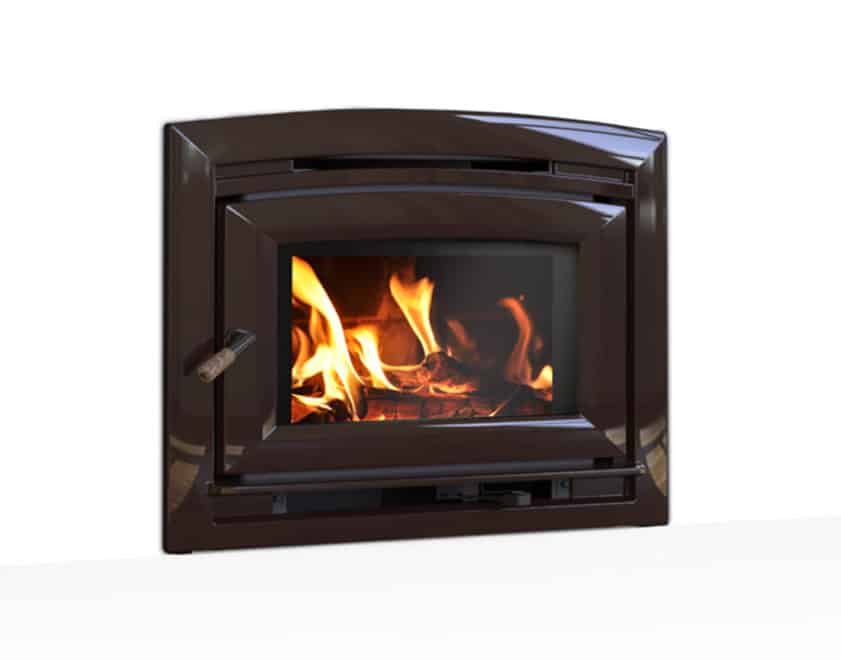
Recent fireplace insert models tend to be incredibly efficient, no matter what type of fuel they use. However, when it comes down to it, gas fireplace inserts are the more efficient option. Gas inserts burn with over 90% efficiency, but the exact numbers vary by model, so do your research. The flames on gas fireplace inserts are different than in wood fireplaces, and the temperature can easily be adjusted.
Wood fireplace inserts, on the other hand, typically burn between 60% and 80% efficiency. Unlike a traditional wood-burning fireplace that loses the majority of its heat through the chimney, wood fireplace inserts emit much more warmth.
Performance During New Hampshire Winters
New Hampshire winters often bring snowstorms, freezing temperatures, and occasional power outages. For many homeowners, fireplace performance during severe weather is an important consideration.
Gas fireplace inserts provide dependable supplemental heat throughout the heating season, although some models rely on electrical components and may not operate during a power outage. Others are equipped with battery backup systems or standing pilot lights that allow continued operation. Our team can help you understand the capabilities of each model.
Wood fireplace inserts remain a popular choice for homeowners seeking reliable heat during extended outages because they don’t rely on electricity to produce heat. For many families, that added peace of mind is an important advantage during winter storms.
Environmental Impacts of Fireplace Inserts
Gas fireplace inserts are regarded as the more efficient and environmentally friendly option, but EPA-regulated wood fireplace inserts can also be quite efficient. Gas fireplace inserts produce hardly any smoke or particulate emissions, making them usable in most regions all year long. Wood fireplace inserts burn with more smoke and particulate emissions, but as mentioned, newer models are much more efficient than their older relatives.
Selecting the Right Fireplace Insert for Your Home
Both gas and wood fireplace inserts provide excellent heating performance, improved energy efficiency, and beautiful focal points for your home. The best choice comes down to your priorities.
A gas fireplace insert may be the better fit if you want:
- Push-button convenience
- Low maintenance
- Adjustable heat output
- Clean, efficient operation
- Everyday supplemental heating
A wood fireplace insert may be the better fit if you want:
- The authentic experience of burning real wood
- Natural radiant heat
- Supplemental heating during power outages
- Traditional fireplace ambiance
- Greater independence from utility services
If you’re still unsure which fireplace insert is right for your home, visiting our showroom allows you to compare available models in person while discussing your heating goals with our experienced team.
At the end of the day, there is no universal choice when it comes to fireplace inserts, but the right option is out there for you, whether it be wood- or gas-fueled. If you’re unsure how to determine which fireplace insert to choose, connect with the experts at Energysavers. Whether you’re shopping for a new build or looking to replace your current home heating system, we’ve got the ability to fit you with the right fireplace insert for your home. And, once your fireplace insert is installed, we can even handle the maintenance and repairs needed to keep you up and running.
Frequently Asked Questions
Which fireplace insert is more efficient?
Both gas and modern EPA-certified wood fireplace inserts are highly efficient compared to traditional open fireplaces. Gas inserts provide consistent, controllable heat, while wood inserts produce excellent radiant heat using seasoned firewood.
Which fireplace insert requires less maintenance?
Gas fireplace inserts generally require less routine maintenance because they don’t produce ash or require firewood storage. Wood fireplace inserts require periodic ash removal, chimney inspections, and regular cleaning to maintain safe operation.
Which fireplace insert is better during a power outage?
Wood fireplace inserts can continue producing heat without electricity, making them a dependable supplemental heating source during many power outages. Some gas fireplace inserts also operate during outages depending on the model and ignition system.
How do I choose the right fireplace insert?
The best fireplace insert depends on your home’s layout, heating needs, lifestyle, and personal preferences. Visiting a showroom and speaking with experienced fireplace professionals can help you compare options and select the best solution for your home.
About Energysavers, Inc.
Founded over 40 years ago, Energysavers is family-owned and operated out of Meredith, NH. We are proud to provide quality, dependable pellet stoves, wood stoves, fireplaces, hot tubs, saunas, outdoor grills, and more. Visit the store room and choose from the many models and sizes we have in stock and receive the best price and quality service. Call us today at (603) 279-7961 to visit our store or schedule a home inspection.
Request Service or Installation
Whether you're planning a new installation or scheduling service for an existing system, our experienced team is here to help.
Related Articles
Safety First: Essential Tips for Fireplace and Insert Maintenance
Posted on May 15, 2024
Protect your family and home from emergencies with these important fireplace and insert maintenance tips, including seasonal cleaning and safety practices.
Read More
Preparing for a Fireplace Insert to be Installed in Your Home
Posted on February 2, 2024
Prepare for a fireplace insert installation in your home with our top tips to ensure the process is quick and efficient.
Read More
Choosing the Right Fireplace Insert
Posted on January 27, 2023
Choosing the right fireplace insert depends on the construction of your fireplace and personal needs; wood, gas, and pellet inserts all have different benefits and drawbacks.
Read More
The Advantages of Gas Fireplace Inserts
Posted on February 7, 2022
Gas fireplace inserts are a cost and energy efficient addition to any space and can also save owners a substantial amount of money on their heating costs for years to follow.
Read More